Overview
As part of the National Instruments Measurement Fundamentals Series, this set of tutorials helps you learn about a specific common measurement application topic through theory explanations and practical examples.
What You Learn
A wide range of systems and applications incorporate digital devices and signals, so advancing your digital fundamental knowledge is important for mastering many of today's test and automation applications. This set of tutorials provides you with essential information about the nature of digital signals, digtial measurements, and the devices used to generate, analyze, and control these signals.
Visit the Test System Development Resource Library to learn how to incorporate these measurements into an automated test system.
Table of Contents
Fundamentals of Digital I/O
![]() |
Voltage Levels are what define how a device determines a valid logic state (logic high level or logic low level). Learn more » |
![]() |
Logic Families (Single-Ended versus Differential) are groups of logic circuits with standardized voltage levels that constitute a voltage high or low level. All circuits within a logic family are compatible with other circuits within that family because they share the same characteristics. Learn more » |
![]() |
Clocked Digital I/O Generation, Acquisition, and Compare are digital operations where binary data is sent or received from a digital device to a device under test (DUT) across multiple pins/channels. Learn more » |
![]() |
Termination is an important principle to understand when designing high-speed digital so that you can maximize signal quality and minimize the effects of signal reflections. Learn more » |
| Industrial Digital I/O Features include isolation, higher voltage levels, programmable power-up states, change-of-state detection, watchdog timers, and industrial certifications. Learn more » |
Common Terminology and Definitions for Digital I/O
Digital Definitions

Digital Concepts
- Creating digital vectors/waveforms (8-min. demo)
- Double Data Rate (DDR)
- Eye Diagram Analysis
- Benefits of deep onboard memory
Examples of Digital I/O Applications
Device Verification/Characterization

- Bit Error Rate Testing (BERT) (7-min. demo)
- Digital-to-Analog (D/A) Converter Testing (4-min. demo)
- Logic Analyzer
- Mixed-Signal Test (webcast)
Functional Test Applications

- Memory Testing (6-min. demo)
- Voltage measurements with a digital device
- Open and shorts
- Stuck-at-fault tests
- Diode testing
Interfacing with Digital Devices

- Digital protocols (JTAG, I2C, and SPI)
- Interfacing with ECL devices
- Interfacing with LVDS devices
- Customizing Digital Communication Interfaces
Industrial Applications

- Using a Magnetic Encoder for Anti-Lock Braking
- Using a Flow Sensor in Semiconductor Manufacturing
- Optical Isolation in a Chemical Pigment Mixing
- Change Detection in a Power Plant Monitoring
Choosing the Correct NI Digital I/O Device for Test, Control, and Design
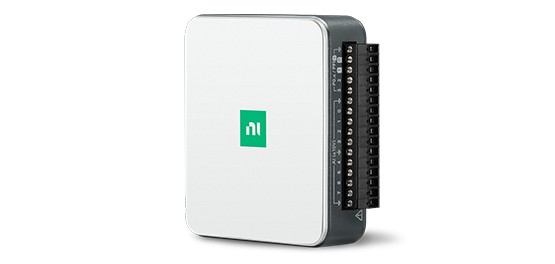
National Instruments provides a wide range of digital I/O (DIO) products with different speed, voltage, and timing options to meet the digital needs of your test, control, and design applications. Check out the resources below to determine which product line offers the ideal feature set for your application.
- Digital I/O for Test, Control, and Design
- Digital waveform generator/analyzers (high-speed digital I/O)
- Industrial digital I/O
- Reconfigurable digital I/O
- Counter/Timer I/O
Reader Comments | Submit a comment »
Legal
This tutorial (this "tutorial") was developed by National Instruments ("NI"). Although technical support of this tutorial may be made available by National Instruments, the content in this tutorial may not be completely tested and verified, and NI does not guarantee its quality in any way or that NI will continue to support this content with each new revision of related products and drivers. THIS TUTORIAL IS PROVIDED "AS IS" WITHOUT WARRANTY OF ANY KIND AND SUBJECT TO CERTAIN RESTRICTIONS AS MORE SPECIFICALLY SET FORTH IN NI.COM'S TERMS OF USE (http://ni.com/legal/termsofuse/unitedstates/us/).