Academic Company Events NI Developer Zone Support Solutions Products & Services Contact NI MyNI

Document Type: Tutorial
NI Supported: Yes
Publish Date: Oct 23, 2006


Feedback


Yes No

Related Categories

Related Links - Developer Zone

Related Links - Products and Services

Building an Analog Input VI in NI-DAQmx

10 ratings | 4.70 out of 5
Read in | Print

The National Instruments Getting Started with NI-DAQmx Series is aimed at helping you learn NI-DAQmx programming fundamentals. Through video and text tutorials, this series will take you from verifying your device's operation in Measurement & Automation Explorer (MAX) to programming data acquisition applications using LabVIEW. It is intended for both the beginner who wants to learn how to use the DAQ Assistant, as well as the experienced user who wishes to take advantage of advanced NI-DAQmx functionality.

Overview

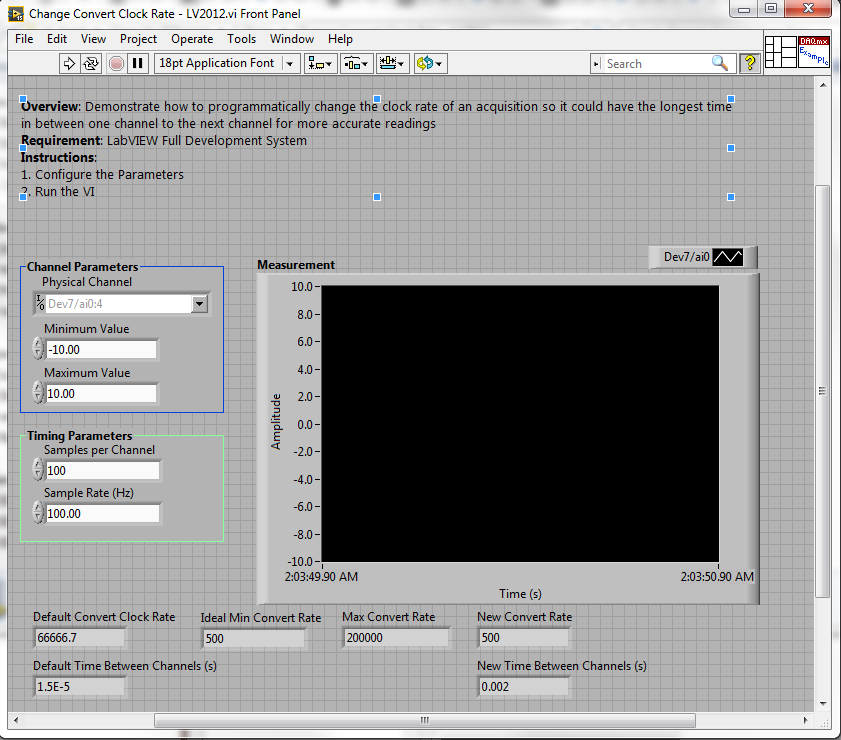
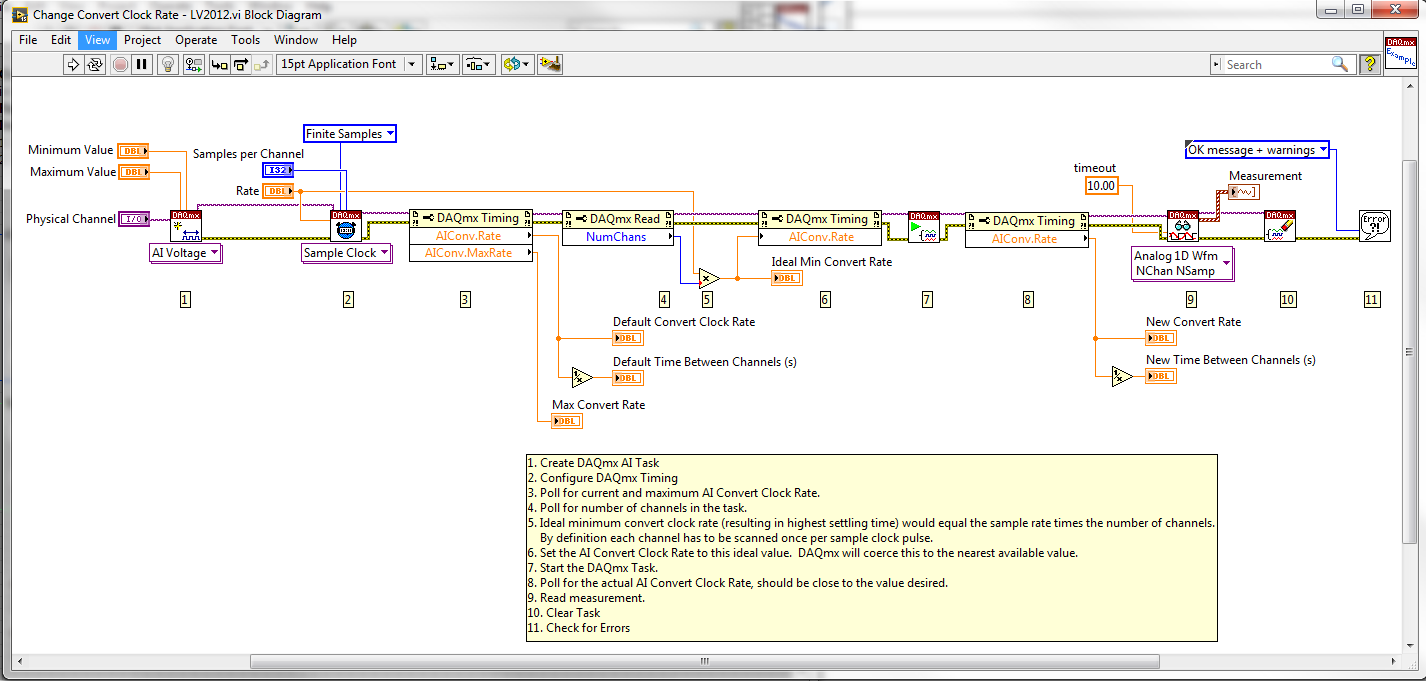
This video demonstrates how to create a DAQmx VI in LabVIEW to acquire a simple analog input signal. This same process can easily be applied to create LabVIEW code that acquires signals from thermoucouples, strain gauges, microphones, or any other analog device.

Follow through the video and be sure to check out the examples in the Example Finder by going to Help >> Find Examples.  There are many examples in the Hardware Input and Output >> DAQmx folder.

Before you Watch

Before playing the video be sure to have LabVIEW open to the welcome screen or a blank vi.

Video

Click Here to Open the Video Tutorial


10 ratings | 4.70 out of 5
Read in | Print

Reader Comments | Submit a comment »

Nice straightforward discussion
Simple walk through of the basics of analog acquisition. Not for the professional programmer.
- Sep 24, 2007

not enough usefull information
The presentation does not give enough useful information about why some things are being done. More details on the different input modes etc would be helpful.
- Jul 30, 2007

Excellent presentation
- Victor Cochrane, VW Cochrane &Assoc P/L. vwc@surveying.com.au - Dec 30, 2006


Legal
This tutorial (this "tutorial") was developed by National Instruments ("NI"). Although technical support of this tutorial may be made available by National Instruments, the content in this tutorial may not be completely tested and verified, and NI does not guarantee its quality in any way or that NI will continue to support this content with each new revision of related products and drivers. THIS TUTORIAL IS PROVIDED "AS IS" WITHOUT WARRANTY OF ANY KIND AND SUBJECT TO CERTAIN RESTRICTIONS AS MORE SPECIFICALLY SET FORTH IN NI.COM'S TERMS OF USE (http://ni.com/legal/termsofuse/unitedstates/us/).